Hidden beneath Capri's rugged limestone cliffs lies a sea cave so otherworldly that Roman emperors claimed it as their own private sanctuary. For over two millennia, the Blue Grotto has drawn the powerful, the curious, and the awestruck to its shimmering azure waters.
The Blue Grotto, known in Italian as Grotta Azzurra, was not born of human ambition but of geological time. Formed thousands of years ago through the gradual erosion of Capri's volcanic limestone coastline, the cave sits just above sea level at the island's northwestern shore. Ancient evidence suggests the grotto was well known to the Romans, with archaeological discoveries of marble steps, a small Roman quay, and several statues recovered from the cave floor — including figures of Triton and Neptune — confirming that this luminous cavern was actively used during antiquity, likely as a nymphaeum, a sacred bathing site dedicated to water spirits.
Emperor Tiberius, who ruled Rome from 14 to 37 AD and spent the final decade of his life on Capri at his grand Villa Jovis, is believed to have used the Blue Grotto as a private imperial bathing pool. The statues retrieved from the cave's submerged floor, now displayed at the Museo Nazionale in Naples, lend strong credence to this theory. After the fall of Roman imperial power on Capri, the grotto faded from recorded history for over a thousand years. Local fishermen knew of its existence but largely avoided it, convinced by superstition that it was haunted by witches and malevolent spirits — a belief that kept the cave shrouded in mystery throughout the medieval period.
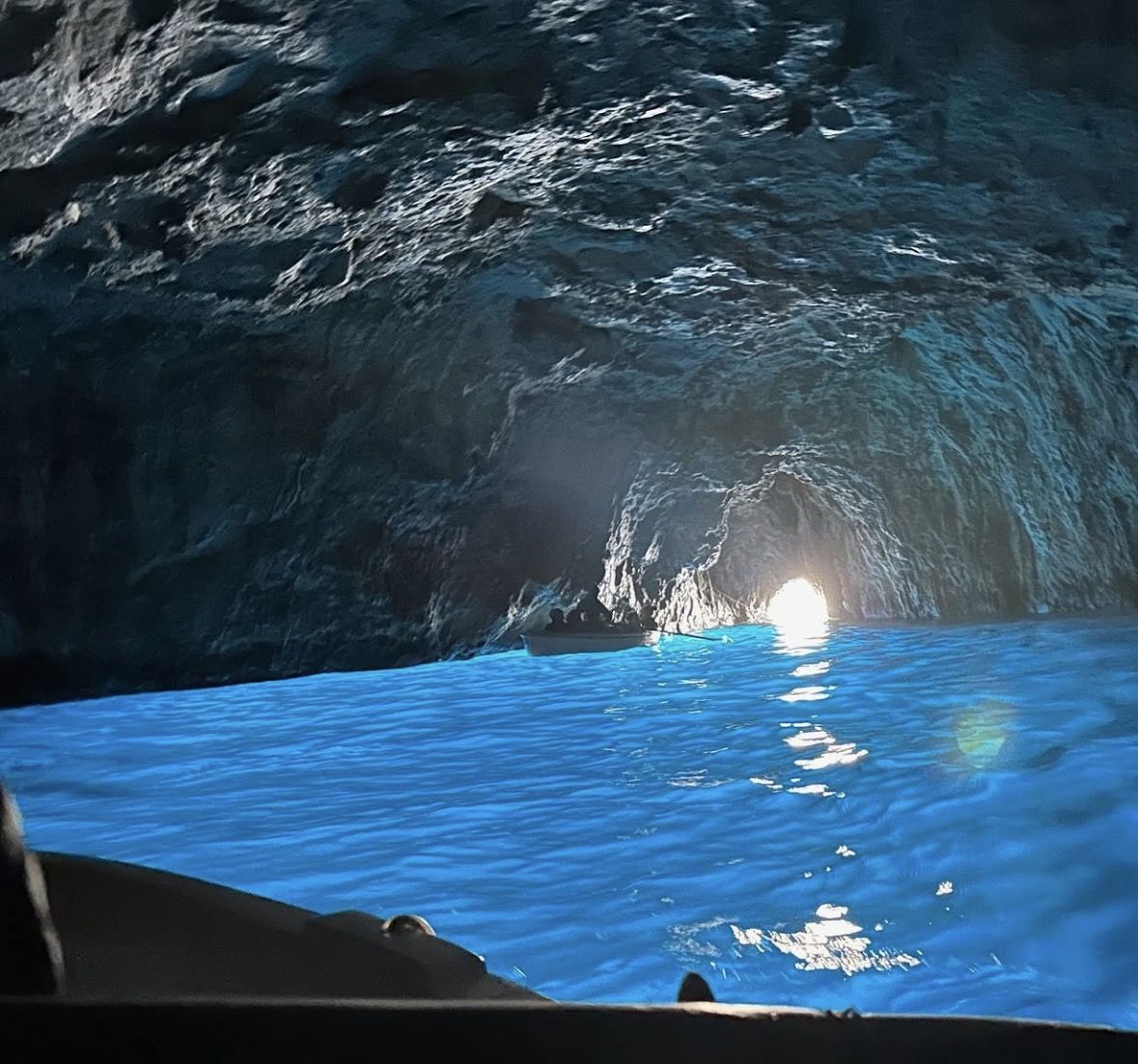
The Blue Grotto's defining phenomenon — its extraordinary, almost supernatural blue radiance — is entirely the result of optical physics. Sunlight enters the cave through a submerged opening roughly one metre tall and two metres wide, located beneath the small entrance arch visitors use today. As the light passes through this underwater aperture and refracts upward through the water, it filters out all red wavelengths, leaving only brilliant blue and silver tones. This process, combined with the cave's enclosed reflective interior, produces an intense, glowing luminescence that seems to emanate from the water itself rather than from any external source.
The grotto measures approximately 54 metres in length, 30 metres in width, and rises to a ceiling height of roughly 15 metres at its tallest point. The single entrance arch stands just over one metre high, forcing visitors to lie flat in small rowboats as skilled boatmen pull the vessel through by gripping an iron chain anchored to the rock wall. The tidal conditions dramatically affect access: when the sea is even slightly rough, the entrance becomes impassable and the grotto closes entirely. This unpredictability has long been part of the grotto's mystique, making a successful visit feel like a genuine reward rather than a guaranteed transaction.
The cave's acoustics are as remarkable as its lighting. Boatmen have long been famous for singing inside the grotto, their voices amplified and enriched by the enclosed stone walls in ways that visitors find deeply moving. The tradition of singing within the cave dates back to the earliest days of organised tourism on Capri and continues today. At its deepest and brightest, the Blue Grotto creates a visual effect that turns swimmers' bodies an iridescent silver against the electric blue water — a sight so startling and beautiful that early visitors struggled to find language adequate to describe it, often resorting to comparisons with the supernatural.
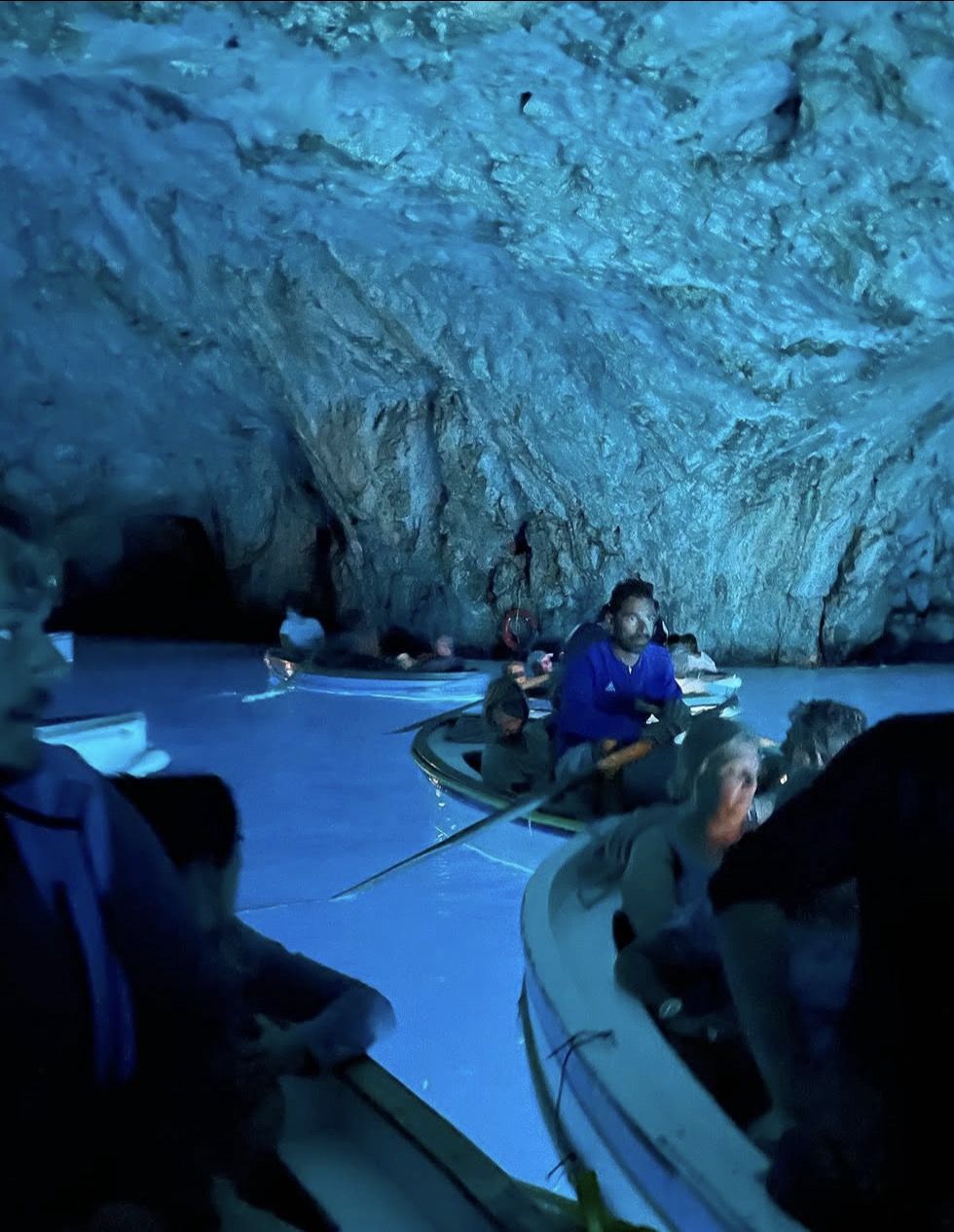

The Blue Grotto's modern story begins on 18 October 1826, when Polish poet August Kopisch and his friend Ernst Fries, guided by local fisherman Angelo Ferraro, became the first recorded visitors to enter the cave in the modern era. Kopisch published a vivid account of the experience, and his writing spread rapidly across Europe's intellectual circles, arriving at a moment when Romanticism was at its cultural peak. The idea of a hidden, glowing cave with imperial Roman roots was irresistible to a generation enthralled by antiquity, nature, and the sublime. Within years, the Blue Grotto had become the most talked-about natural attraction in the Mediterranean.
The grotto's fame accelerated Capri's transformation from a quiet fishing island into one of Europe's most fashionable destinations. Throughout the latter half of the nineteenth century, writers, painters, composers, and aristocrats made pilgrimages to Capri specifically to visit the cave. Celebrated figures including Alexandre Dumas, Ivan Turgenev, and later D.H. Lawrence all visited Capri, and the Blue Grotto featured prominently in the island's artistic and literary mythology. The cave also attracted royalty: Emperor Wilhelm II of Germany visited Capri multiple times, and the Blue Grotto was a standard feature of his itinerary, further cementing its status as a site of international cultural prestige.
Infrastructure improvements in the late nineteenth and early twentieth centuries formalised the visitor experience. A system of organised boat trips from the Marina Grande was established, and the iron chain used to pull rowboats through the entrance was permanently installed. The Italian government recognised the grotto's importance, and entrance fees were introduced, with revenues helping to maintain access and safety. Photography arrived on Capri in the 1860s, and early images of the Blue Grotto — with their eerie, gleaming waters captured in long exposure — spread even further, reaching audiences in America and across Europe who had previously known the cave only through painted representations and written descriptions.
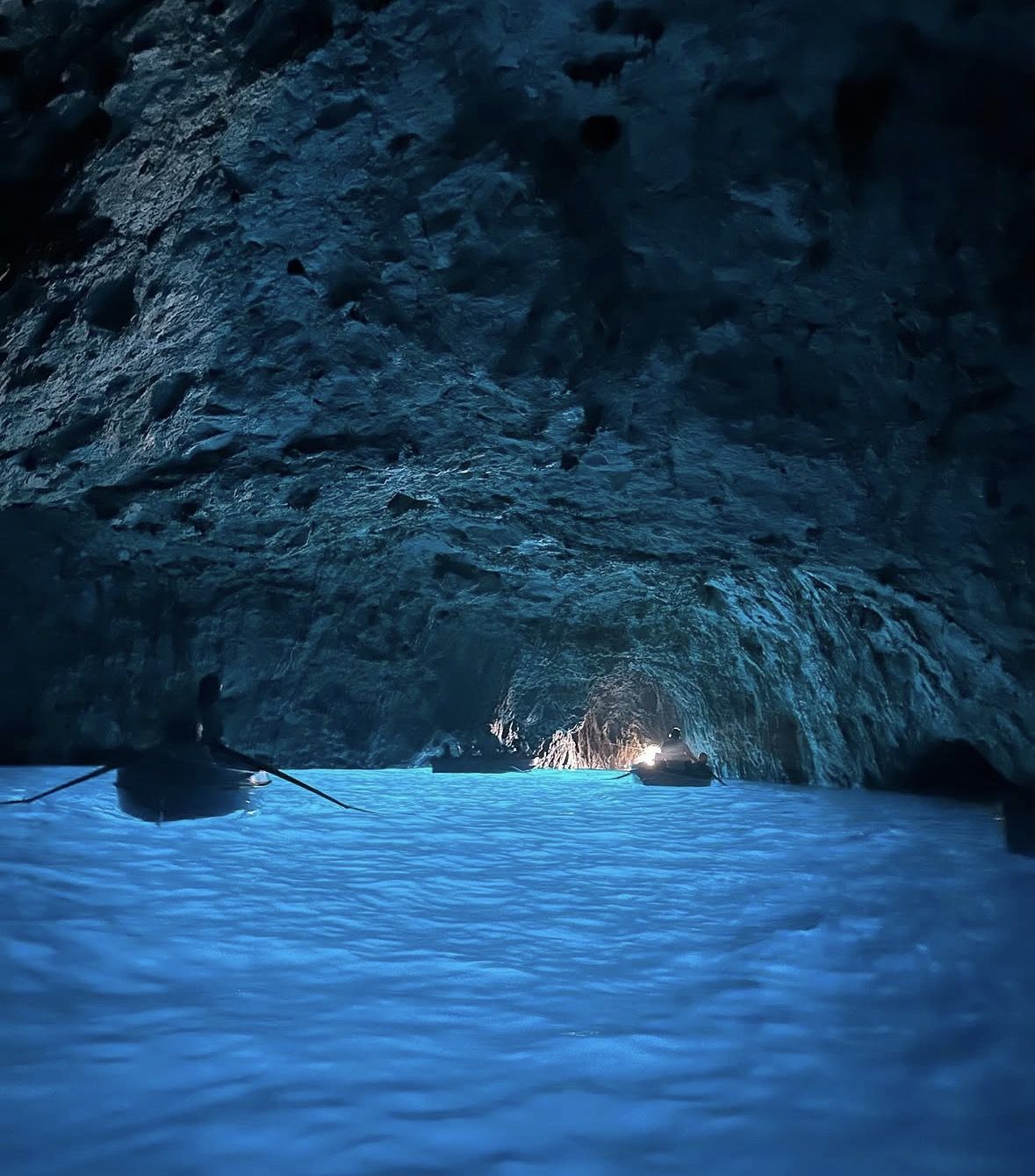
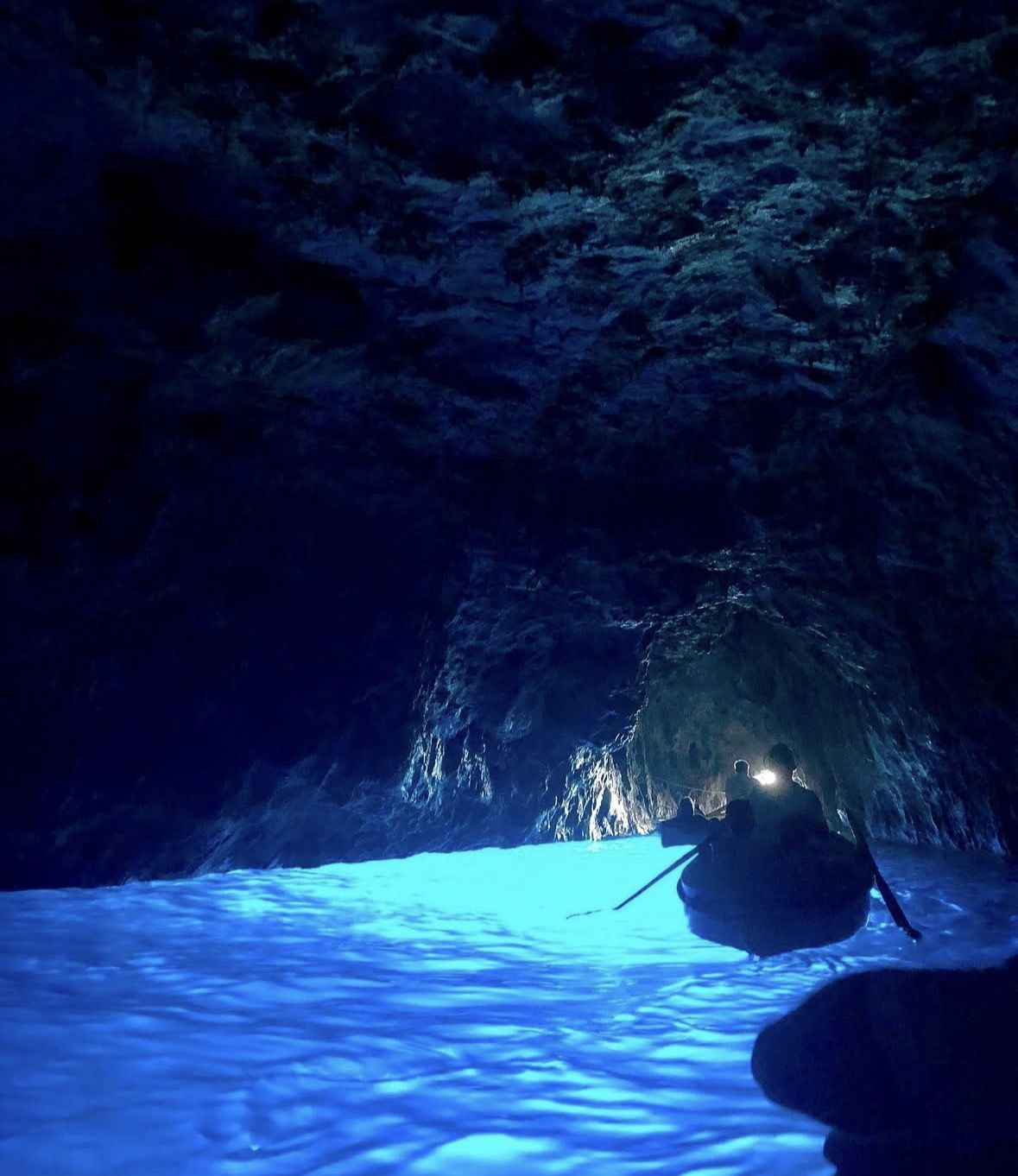
Today, the Blue Grotto welcomes an estimated 3,000 to 5,000 visitors on peak summer days, making it one of the most visited natural sites in all of Italy. The experience remains deliberately low-tech and intimate: visitors arrive by motorboat from Capri's Marina Grande, transfer into small wooden rowboats operated by licensed boatmen, and are pulled through the narrow entrance arch one boat at a time. The cave is open daily except when sea conditions make entry unsafe, typically from April through October. Entrance fees include both the motorboat transfer and the rowboat ride inside the grotto, with additional gratuities customarily given to the singing boatmen.
Nearly two thousand years after Roman emperors bathed in its waters and two centuries after August Kopisch introduced it to the modern world, the Blue Grotto continues to deliver an experience that no photograph or description fully prepares visitors for. The shock of that blue light — alive, pulsing, seemingly lit from within the earth itself — remains as arresting today as it was to the Romantics who first spread its fame across Europe. Whether you are a history enthusiast tracing imperial Roman footsteps, a photographer chasing the perfect cerulean shot, or simply a traveller hungry for genuine wonder, the Blue Grotto of Capri rewards every visitor who makes the journey to its ancient, luminous shore.
Ready to Experience It Yourself?
Don't leave one of the Mediterranean's greatest natural wonders to chance — guided tours of the Blue Grotto sell out fast during peak season, and expert local guides ensure you make the most of every glowing, unforgettable moment inside the cave. Browse our handpicked selection of Blue Grotto boat tours, including options with small groups and skip-the-queue access, to secure your spot today. Your encounter with two thousand years of history, myth, and breathtaking natural beauty is just one click away.
Book Your Tour Now